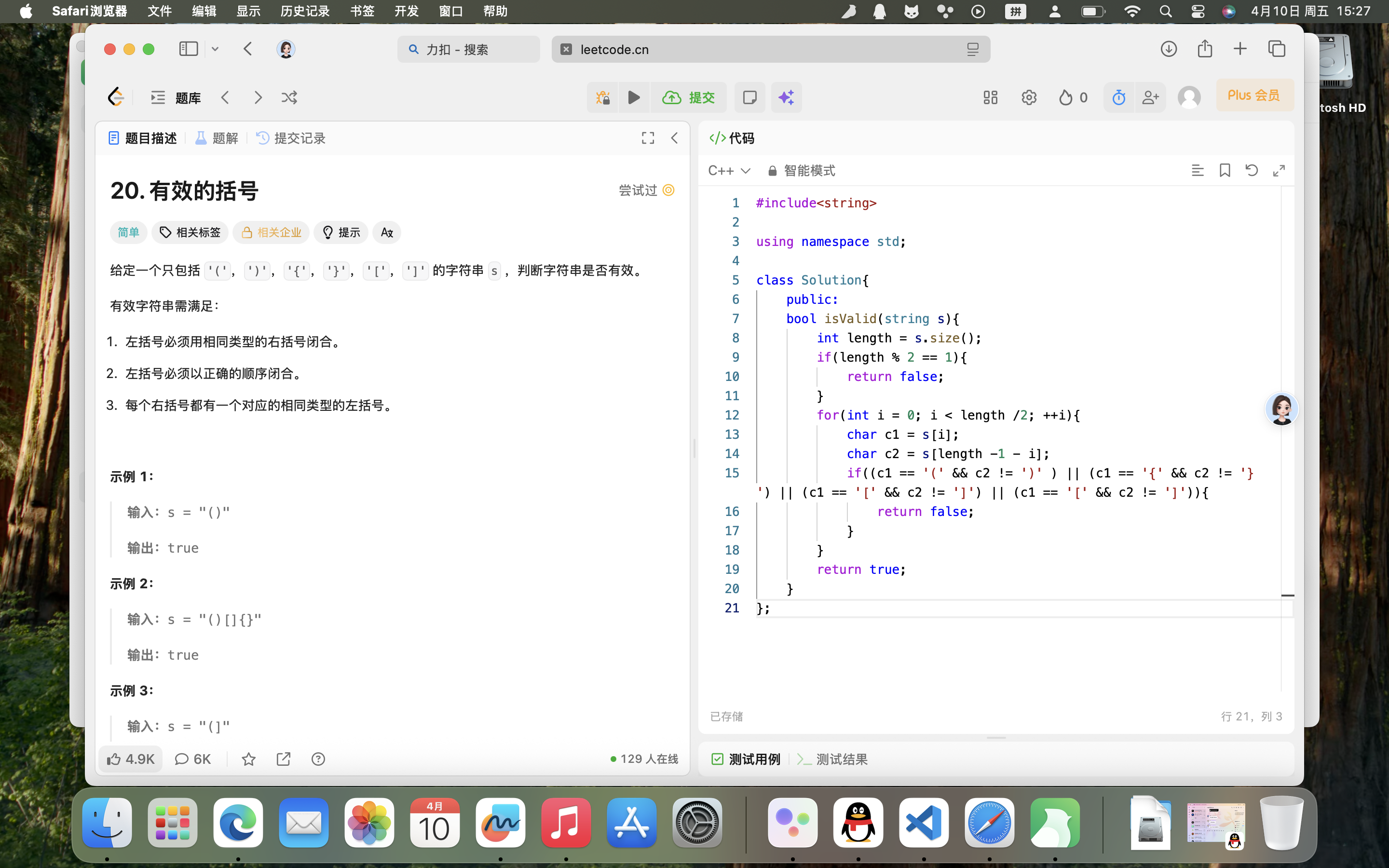
初解没有考虑分开的单类符号的情况,显然光暴力枚举没有未来。还是需要用到栈这个工具。
1
2
3
4
5
6
7
8
9
10
11
12
13
14
15
16
17
18
19
20
21
22
23
24
| #include<string>
using namespace std;
class Solution{
public:
bool isValid(string s){
int length = s.size();
if(length % 2 == 1){
return false;
}
if((s == "()[]{}") || (s == "(){}[]") || (s == "{}()[]") || (s == "{}[]()") || (s == "[](){}") || (s == "[]{}()")){
return true;
}
for(int i = 0; i < length /2; ++i){
char c1 = s[i];
char c2 = s[length -1 - i];
if((c1 == '(' && c2 != ')' ) || (c1 == '{' && c2 != '}') || (c1 == '[' && c2 != ']') || (c1 == '[' && c2 != ']')){
return false;
}
}
return true;
}
};
|
标准解法
1
2
3
4
5
6
7
8
9
10
11
12
13
14
15
16
17
18
19
20
21
22
23
24
25
26
27
| #include <string>
#include <stack>
using namespace std;
class Solution {
public:
bool isValid(string s) {
if (s.size() % 2 == 1) return false;
stack<char> st;
for (char c : s) {
if (c == '(' || c == '[' || c == '{') {
st.push(c);
} else {
if (st.empty()) return false;
char t = st.top();
st.pop();
if ((c == ')' && t != '(') ||
(c == ']' && t != '[') ||
(c == '}' && t != '{')) {
return false;
}
}
}
return st.empty();
}
};
|